> About the summer school
> Upcoming edition
> Scientific organisation
> The location
> Application requirements
> Apply now!
> Upcoming edition
> Scientific organisation
> The location
> Application requirements
> Apply now!
![]()
![]()
![]() Following four successful annual summer school events with the general title PARIS TRANSFORMATIONS (Paris Transformations I: Architectural, Urban, Metropolitan, in 2022, Paris Transformations II: Landscape, Gardens, Urban Parks, in 2023 ; Paris Transformations III: Places of spectacle in 2024, and Paris Transformations IV: Places of Fashion, in 2025), we are pleased to launch the fifth event in the series for the year 2026, ParisTransformations V : Social Housing, from the 12th to the 19th of July 2026.
Following four successful annual summer school events with the general title PARIS TRANSFORMATIONS (Paris Transformations I: Architectural, Urban, Metropolitan, in 2022, Paris Transformations II: Landscape, Gardens, Urban Parks, in 2023 ; Paris Transformations III: Places of spectacle in 2024, and Paris Transformations IV: Places of Fashion, in 2025), we are pleased to launch the fifth event in the series for the year 2026, ParisTransformations V : Social Housing, from the 12th to the 19th of July 2026.
Social Housing in Paris, an architectural and social laboratory
Since the 19th century, social housing has been a crucial component of architectural and urban planning practices addressing the housing crisis caused by the Industrial Revolution and rapid urbanization. From the famous Familistère de Guise1, the first workers' housing complex in Napoleon's Paris2 to the utopian models of socialist thinkers and the radical proposals of the interwar period, social housing has served both as a means of social policy and an object of urban and architectural experimentation in France. Its design and typology has been shaped by the architectural, ideological, political, and technological conditions of each era.
This is exemplified by the establishment of Paris Habitat, a public body founded 131 years ago in Paris, which still manages social housing in the city today. Closely associated with the creation of HBM (Habitations à Bon Marché) in 1894, it now oversees a reach and historic building stock considered parts of Paris’s cultural heritage. Before World War I, social housing was largely the result of philanthropic and hygienist initiatives, often through foundations3, with many designs were winning architectural competitions.
1919 marked a turning point when the demolition of the city walls transferred a vast area of undeveloped military land to the State, mainly used for constructing social housing complexes. This peripheral zone with its social housing complexes and its homogeneous architectural expression, became after Haussmann, the second identity defining image of Paris. Between 1921 and 1939, 58.500 HBM dwellings were built. Ensuring sanitary conditions for the middle and lower income classes remained a key goal exemplified by the iconic Rue des Amiraux complex (18e,1927, architect Henri Sauvage), built around an indoor communal swimming pool4.
Between 1920 and 1930, many housing estates were built across the greater Paris area, Seine-et-Oise, and Seine-et-Marne. Some social housing complexes began as garden cities, and through successive expansions evolved into large scale residential developments of particular architectural and urban planning interest, such as the garden city of Saint Gervais in Pantin, which was developed between 1927 and 1952. There are also cases of successive expansions of social housing complexes that began as garden cities and gradually evolved into huge residential developments of particular architectural and urban planning interest.
Between 1953-1973 the population growth and immigration, led to the construction of large-scale housing complexes (such as La Caravelle à Villeneuve-la Garenne complex (Hauts-de-Seine,1959 - 67, by the architectJ. Dubuisson), the social housing complexes in Argenteuil, Sarcelles, La Courneuve, Bagneux, Aubervilliers, Creteil. Montreuil, Les Carreaux in Villiers Le Bel, etc. These massive developments defined the modern "banlieue" in Paris areas rich in political, social, and artistic references. Around the same period, the monumental Mouchotte building (arch. J. Dubuisson) was constructed as part of Monparnasse railway station redevelopment.
Contemporary transformations of the Social Housing building stock
With an average age of 67 years and over 128,000 dwellings, Paris’s social housing stock reflects architectural and urban diversity. Paris Habitat has long be engaged in preservation, adaptation and conversion efforts contributing to a greener city and improved quality life for residents.
Today, social housing is redefined in its purpose and scope, with shortages growing more severe amid globalization, economic and climate crises, the refugee crisis, and the COVID-19 pandemic, reaffirming housing as a matter of social jusitice.
In the 21st century, Parisian social housing has become a field of architecture and urban interventions with the practice of transformation gaining particular momentum. Historical complexes are been reimagined to meet modern needs.
A typical example is the conversion of a large-scale complex (129 m long) for social housing in Jussieu (5e) into 600 student residences.
Architects like Lacaton & Vassal and Frederic Druot5, internationally recognized for their approach to conversion rather than demolition, had transformed structures like the Tour Bois le Prêtre - Paris 17e, turning a 1960s tower into a modern, sustainable social housing building. Similar initiatives are underway in La Courneuve complex.
Responding to increasing social housing needs by transforming existing buildings
Transformations also extend to repurposing 19th century or industrial buildings such as Hall Pujol, (a converted railway facilitiy into a multi-use complex that includes social housing, railway stations and infrastructure, the Batignolles station(now Martin Luther King 17e park), and the19th-century Saint Vincent de Paul hospital (now an eco- neighborhood), Other examples include conversions of the La Poste Louvre, from an old post office to a multi-purpose complex with social housing, Caserne des Minimes, and Caserne Exelmans, 19th century fire stations and police stations.
The decline of car in the inner city, has also freed large parking spaces for redevelopment, many now converted into social housing. A typical example is the conversion of the garage that belonged to the Van Loo (1958) into a social housing building - prefabricated wooden structures (architects: Atelier WRA). And a garage at 43, rue Laborde (8e) (arch. GENS) into social housing, while sometimes garages are demolished to make way for social housing buildings. (e.g. the transformation of the Jean-Nicot passage (7e).
The search for social housing space is further reinforced by the SRU Law (Lois Solidarite et Renouvellement Urbain, 2000), mandates that roughly 18% of new construction be allocated to social housing, leading to mixted-use projects such as the Samaritaine redevelopment into a complex which integrades retail, hospitality and housing.
Urban transformations in Paris including social Housing
In an effort to address the critical issue of social housing in Paris, plans were made for the use of the facilities after the 2024 Olympic Games after the Games focusing on the Saint Denis area where the decision to convert them into social housing prevailed driving significant architectural and urban transformations.
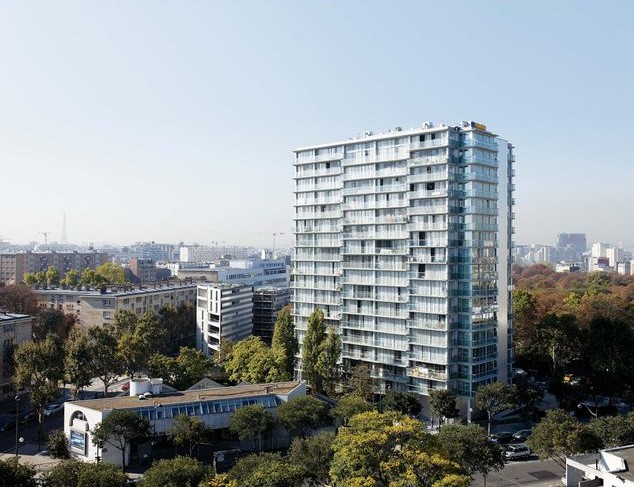
![]()
Bois-le-Prêtre Tower - Paris 17e, known as Alcatraz, involving the conversion of a tall building for social housing from 1960 into a modernized complex.
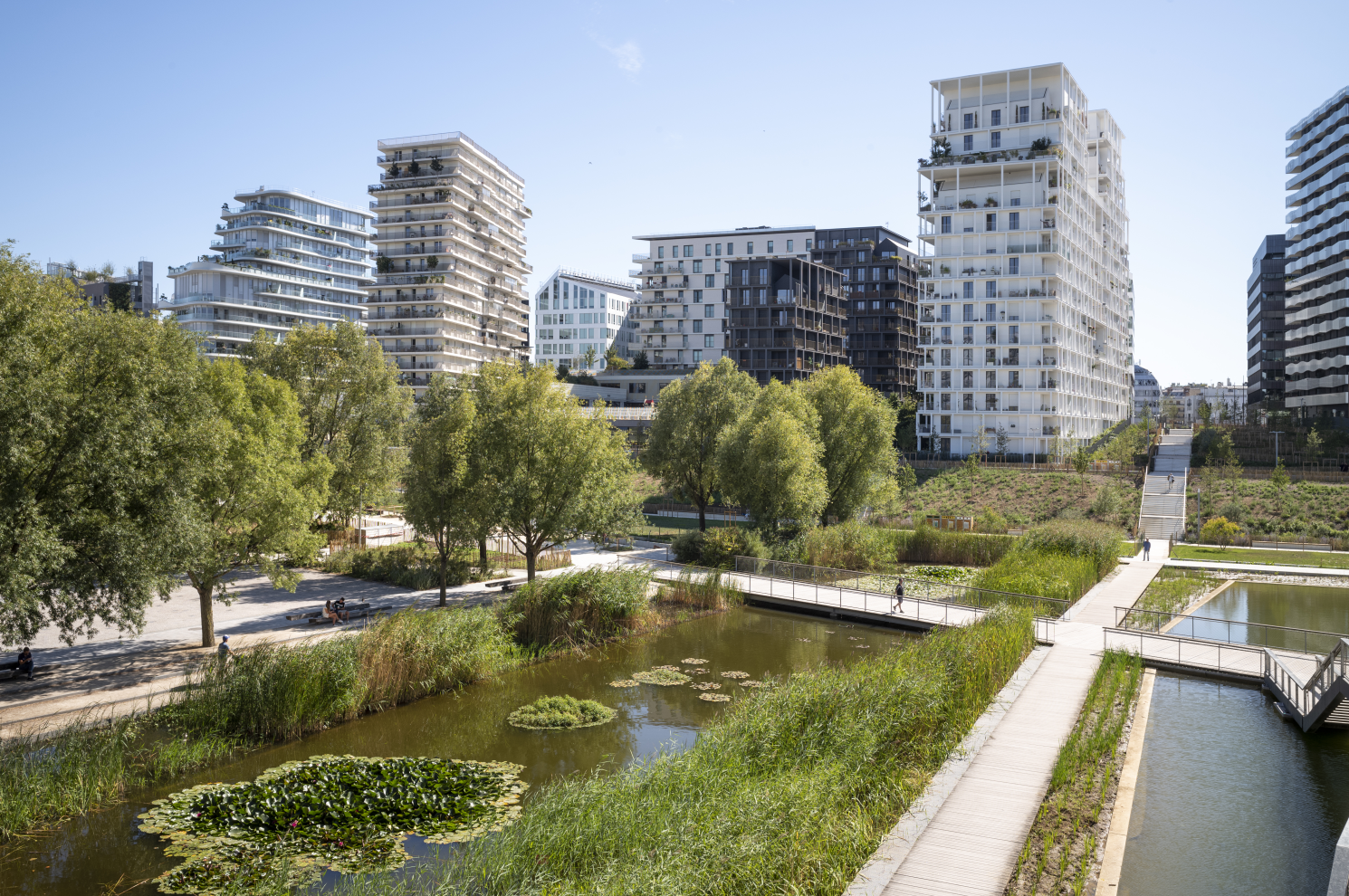
![]()
Martin Luther King Park or Clichy-Batignolles Park – Martin Luther King, a 10-hectare public green space in Paris in the Batignolles district.
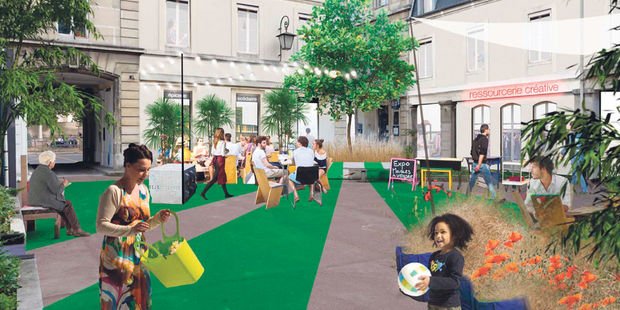
![]()
The former Saint-Vincent de Paul Hospital has been transformed into a mixed-use neighbourhood with shops, cultural facilities, a school and a nursery.
The Summer School will explore all facets of Paris’s social housing landscape - historical, social, and contemporary- in an effort to highlight the significance of urban and metropolitan transformations through field visits and expert lectures, during a one-week program.
You can find all the information about this upcoming edition, including the presentation of the visited sites and the conferences, in the brochure, following this link
︎